SelectSmart.com logo

Philosophy & Philosopher Notes

Click on an image or a name for information. Go to the Philosophy Selector

Aquinas

Aquinas (1225 or 1227–1274)

  • All life has a purpose.
  • Meeting this purpose allows one to be happy.
  • Happiness is to be found in the love of God.
  • God's grace providing entrance into heaven creates the highest form of human happiness.
  • Short of heaven, a person can achieve a more limited form of happiness through a life of virtue and friendship.
  • Morality is not determined by the arbitrary will of God.
  • Morality is derived from human nature and the activities that are objectively suited to it.
  • The difference between right and wrong can be appreciated through the use of reason and reflection.
  • Religious reflection may supplement the use of reason and reflection to determine right from wrong.
  • Societies must enact laws to ensure the correct application of moral reasoning.
  • Human nature is good because God made it good.
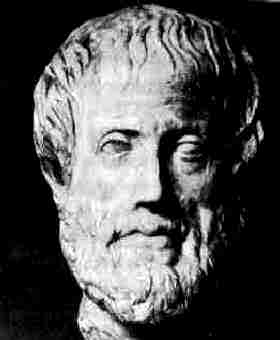
Aristotle

Aristotle (384 BC–322 BC)

  • The life of virtue is rewarding for the individual and the community.
  • The essence of a thing does not exist independent of the thing.
  • There is no completely universal idea of “the good.”
  • There is an individualized ideal form for all living things.
  • In living in accordance with their true nature, humans will find the most enjoyment out of reasoning.
  • An investigation of human nature can reveal how humans ought to act.
  • Humans have a pre-defined purpose.
  • People can have variations on the best way to exist in order to meet their purpose.
  • The mean between the extremes of any given characteristic is the ideal.
  • The rule of the “Golden Mean” is not to be applied mechanically.
  • Practical knowledge is having the right means to one's action and the right ends.
Augustine

Augustine (354–430)

  • Happiness is a union of the soul with God after one has died.
  • Bodily pleasures are relatively inferior to spiritual pleasures.
  • Philosophical reasoning is not the path to wisdom and happiness.
  • A love of God and faith in Jesus is the only path to happiness.
  • God is the one to allow people to practice the love of God.
  • One must love God in order to fulfill moral law.
  • People are inherently evil; only the grace of God (or merit) can save them.
Ayn Rand

Ayn Rand (1905–1982)

  • We should all act with our own interests as the ultimate goal of our actions.
  • We have free will.
  • Moral standards are objective, and can be known rationally.

Cynicism

  • All the fruits of civilization are worthless.
  • Salvation is found in a rejection of society and a return to simple ascetic living.
  • Virtue consists in finding salvation in oneself.
Simone de Beauvoir

Simone de Beauvoir

  • Ethical questions cannot be solved abstractly.
  • One must reject oppression of self and others.
  • One must recognize one's own freedom.
Jean-Paul Sartre

Jean-Paul Sartre (1905–1980)

  • When we choose something, we affirm the value of our choice because we have chosen it above other choices.
  • When we choose something for ourselves, we should choose it for all people.
  • We must be consistent in our interpretations of moral situations regardless of whom the agent is.
  • Logic cannot help us in specific situations.
  • Making conscious moral choices is more significant than consistently following moral guidelines.
  • The conflict between the interests of two people is, in the end, irresolvable.
Immanuel Kant

Immanuel Kant (1724–1804)

  • We can make a priori judgments; the negation of such judgments would be a logical absurdity.
  • We combine a priori and a posteriori knowledge.
  • We have freedom.
  • God is not essential for his moral argumentation.
  • The objective facts about human knowledge lead to Kant's morality.
  • We must act out of a sense of duty in order to be moral.
  • Moral action does not come out of following inclinations.
  • Moral standards must be followed without qualification.
  • We must always act so that the maxim of our actions could be a universal law.
  • We must always treat people as ends, not means.
Friedrich Wilhelm Nietzsche

Nietzsche, Friedrich Wilhelm (1844–1900)

  • We have free will.
  • There is no God.
  • Social conformity should not hold us back.
  • The interests of others should not restrain us.
  • We should be passionate beings.
  • Masculinity, strength and passion are the highest qualities in a person.
  • Conventional morality is a crutch to man.
Jeremy Bentham

Bentham, Jeremy (1748–1832)

  • Nature has placed humans under two states: pain and pleasure.
  • The words right and wrong are significant only when related to the Utilitarian principle.
  • Pleasures are not distinguished by quality; pleasure has quantifiable value.

Epicureanism (Epicurus, 341–270 BC)

  • Pleasure is the ultimate moral end.
  • Dynamic (passionate) pleasures are bad, passive (mild) pleasures are good.
  • The end result of pleasure is what is significant.
Nel Noddings

Noddings, Nel

  • Traditional western ethics has oppressed female voices.
  • We should look to traditional women's practices as a way of determining our ethics.
  • We should use an ethics of care: emphasizing loving others, meeting needs, and nurturing.
Thomas Hobbes

Hobbes, Thomas (1588–1679)

  • By human nature, all of man's voluntary actions are aimed at self-pleasure and self-preservation.
  • Altruism may be pleasurable for the giver.
  • Good = “any object of desire.”
  • We must live under a social contract to have peace.
  • We need a sovereign to enforce the social contract.
David Hume

Hume, David (1711–1776)

  • Reason can show us how to meet our ends, but only passions and sentiment can determine our ultimate goals.
  • No “is” implies an “ought.”
  • Reason cannot give rise to moral judgments.
  • Humans are naturally sympathetic creatures.
John Stuart Mill

Mill, John Stuart (1806–1873)

  • The Utilitarian principle is correct when the quality of pleasures is accounted for.
  • Liberty is the most important pleasure.
William of Ockham

Ockham, William of (1285–1347/49)

  • God's Will is the only determinant of good and evil.
  • Faith and revelation, not philosophizing, allow one to know good from evil.
Plato

Plato (427–347)

  • There is reason to act justly even if one can get away with acting unjustly.
  • There is a single, general, pure idea of goodness that all good things possess.
  • There is only one model of the just person.
  • Justice is a harmony of the soul: intellect, emotion, and desire.
  • The best activity is intellectual stimulation and the most important quality is a strong intellect.
  • The just person is pleased, not in a state of discord.
  • The conflict between one's own good and the good of the community is NOT irresolvable.

Universal Prescriptivism

  • Moral judgments are an expression of our will.
  • Once we have expressed our will through moral judgments, to be logically consistent we must:
    • Make similar evaluations about similar cases.
    • Keep our moral beliefs in harmony with how we live and want others to live.
  • Moral judgments are imperatives.
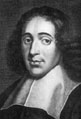
Baruch Spinoza

Spinoza, Baruch (Benedictus) (1632–1677)

  • Determinist.
  • Something must have a desirable effect on man in order to be good.
  • We must understand the determinism of the world.

Stoicism

  • The common capacity to reason allows all humans to achieve virtue and wisdom.
  • The external circumstances of a person's life are irrelevant.
  • One can achieve virtue by becoming indifferent to external differences.
  • Passions must be rejected altogether in deciding what is good and what is bad.
  • Reason alone must be used in deciding what is good and what is bad.
  • The common ability of humans to reason is why ethical relativism should be rejected.

Utilitarianism

  • Strives for moral objectivity.
  • We ought to act in such a way that the consequences of our actions produce the greatest overall amount of good or utility.
  • Rightness is dependent on the consequences of the action.
  • Consequences are viewed in terms of how they affect everyone.
William James

William James (1842–1910)

  • Morally, the ends (results from the action) are mostly the most important.
  • Using morality properly will, for the most part, result in maximization of our own happiness.
  • Self-pleasure or self-preservation of the individual is not in conflict with similar interests of others; virtuous living benefits both individual and community.
  • Moral statements are primarily statements of fact or truth.
  • The distinction between “good” and “bad” generally comes from a unique, transcendent moral realm.
  • Each person has a moral purpose, but the way to live to meet that purpose is unique for each individual.
  • Societal guidance and reinforcement are somewhat necessary for people to live morally.
  • To be virtuous, we should primarily make moral distinctions according mostly to our empirical knowledge.
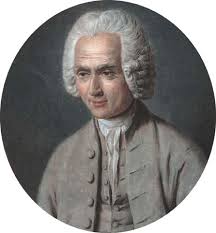
Jean-Jacques Rousseau

Jean-Jacques Rousseau (1712–1778)

  • Freedom and authority are not contradictory when legitimate laws are founded on the general will of the citizens.
  • In obeying the law, the individual citizen is obeying himself as a member of the political community.
  • We cannot have a law of nature if we do not understand the real nature of man.
  • He questions the idea that only rational beings can take part in natural law or have natural rights.
  • In The Social Contract, Rousseau argues that a criminal who attacks social rights becomes a rebel and traitor, breaking the social contract and ceasing to be a citizen.


Career
New: Venn Diagram Selectors! See where you will be placed on the overlapping cicles: Multiple topics.

Venn Diagram Selectors


EQ
See how your EQ compares to US presidents


Generation
Which Generation Defines You Best?
Generation Identifier

Testosterone
Know Your Testosterone Level Indicators
T-Level Indicator


College
Best College Or University For You Includes private, public, 2- & 4-year schools.

Consumer
New: Unbiased, Individualized, Objective Consumer Buying Guides.


Trending
Busiest Member-made Selector


Career
Best Career For You based on your aptitude, interests, etc. Career Selector

Rate Ethical Philosophy Selector:
5 = best, 0 = poor
logo
Write articles and comments that will appear in
Post
Philosophy opinions wanted.
Express yourself! Become a SelectSmart.com member! Create selectors and flowcharts.
join
Share this selector in social media or by text message.